Peak Season May Already Be Here
By: Logistics Management
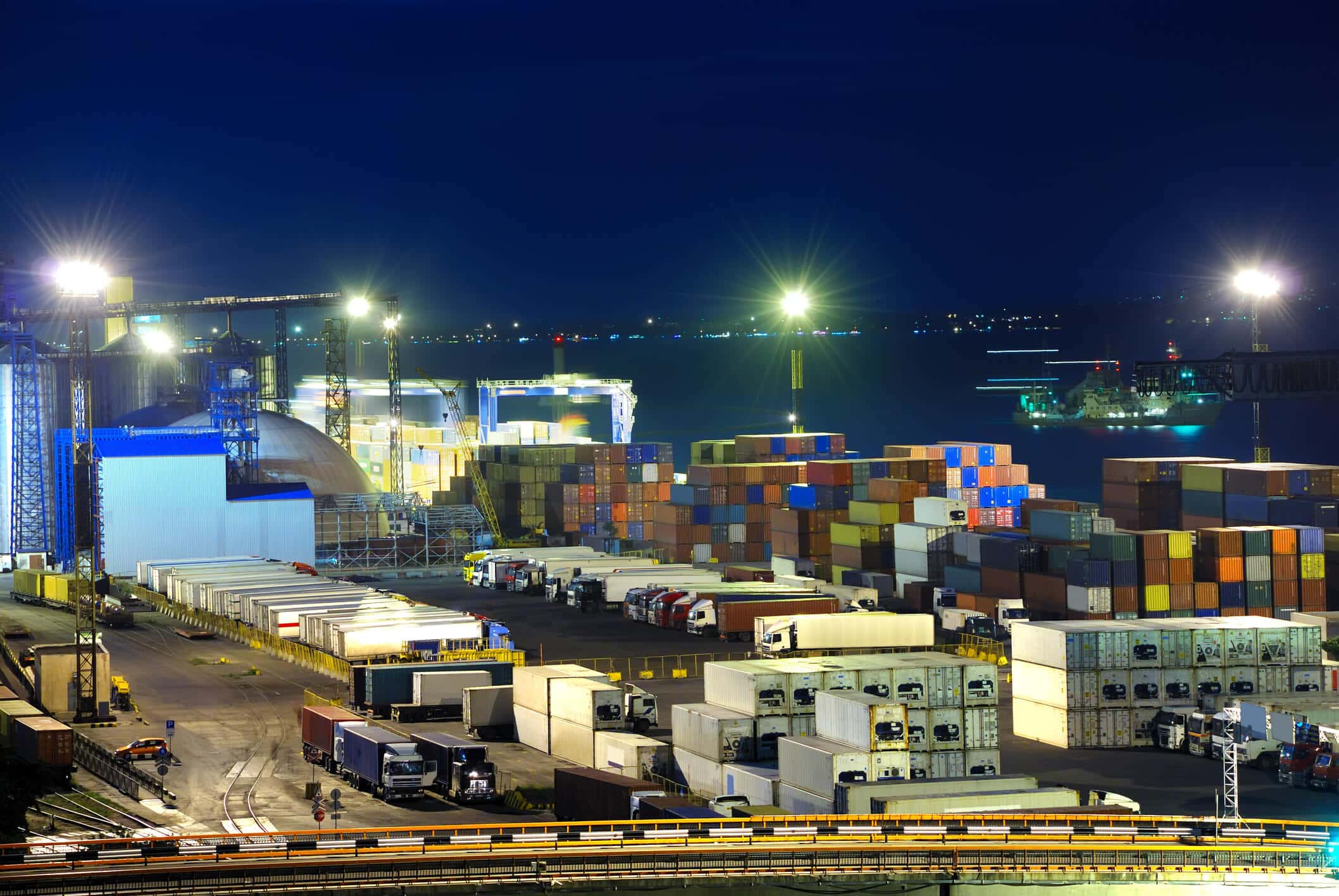
The Ports of Los Angeles and Long Beach reported strong May volume gains, with imports rising 26% and 40% respectively compared to last year. Total monthly volume at Los Angeles reached the second-highest tally since the pandemic surge, while Long Beached marked its third-busiest May on record. While traditional peak season activity typically accelerates later in the summer, retailers appear to be pulling inventory forward to get ahead of potential tariff changes, rising transportation costs, and ongoing geopolitical uncertainty. Port officials noted that cargo demand is proving resilient, with consumers spending, businesses ordering goods, and manufacturers moving parts and components through the supply chain at a healthy pace. Port officials are already forecasting even stronger volumes in June and July.
CAPSTONE TAKEAWAY
Whether this becomes a true peak season surge or simply a temporary inventory pull-forward remains to be seen. But the trend reinforces a familiar lesson for warehouse and transportation operators: organizations that wait for peak season to arrive are often already behind. Port volumes don’t lie, and with imports at both LA and Long Beach running well above five-year averages, the question is whether your labor plans, facility readiness, and contingency staffing strategies are keeping pace. The time to evaluate those is now, not after the freight shows up. Get the help you need for Peak Season Success.
The Real Reason Supply Chain Tech ROI Falls Short
By: Supply Chain Management Review
Despite billions invested annually in TMS, WMS, AI, and automation technologies, most supply chain technology implementations still fall short of expectations — and it’s rarely the software’s fault. Research shows that roughly 89% of implementations realized less than 76% of projected ROI, and nearly 89% fell short on time, budget, or expected outcomes. The root cause is that organizations routinely select technology before defining the business problems it needs to solve. Most implementations fail due to poor planning, inadequate governance, underfunded change management, and the disconnect between the technology and operations teams. The same pattern is now emerging in AI deployments, where executive pressure to “implement AI” means organizations aren’t fully addressing labor planning, process standardization, maintenance requirements, training, and operational accountability.
CAPSTONE TAKEAWAY
The industry often talks about selecting the right technology. The bigger challenge is executing around it. Whether deploying robotics, AI, warehouse automation, a WMS, or a TMS, success depends on much more than software and equipment. Organizations must also align labor, processes, maintenance, training, and operational leadership — and they need to do that work before go-live, not after ROI misses start showing up in the data. Technology enables performance. Execution delivers it. That distinction matters especially in warehouse and logistics environments, where operational variables can make or break even the most sophisticated system implementation.


U.S. Companies Stop Waiting for Supply Chains to Return to Normal
By: Wall Street Journal
The 2025 CSCMP State of Logistics Report confirmed what many supply chain leaders have already accepted: stability isn’t coming back. U.S. businesses spent $2.4 trillion on logistics last year — down slightly as a share of GDP — but executives speaking at the report’s release panel were clear that cost reduction alone is no longer the measure of a well-run supply chain. “Normalcy is not coming back,” said Ford Motor’s head of North American transportation. “A successful supply chain is not going to be based upon scale or your buying power, but it’s going to be based upon your agility and your decision-making speed.” Companies are responding by building more flexible networks: diversifying across ports, blending contract and spot rates, and shifting from passive contract management to active, scenario-based planning. The disruptions keeping them busy include tariff volatility, the war in Iran, rising trucking rates after a four-year slump, and emerging grid-pressure risks from AI data center build-outs.
CAPSTONE TAKEAWAY
The competitive advantage in supply chain has shifted. It no longer belongs to the company with the lowest cost structure or the most square footage — it belongs to the organization that can read a disruption, adapt quickly, and keep moving. That requires flexible labor models that can scale without the overhead of traditional workforce ramp-ups, operational visibility that surfaces problems before they become failures, and contingency planning that goes beyond a binder on a shelf. The shippers described in this article haven’t found a way to eliminate disruption; they’ve built operations that expect it. For logistics and 3PL partners, that’s the new baseline for what a meaningful partnership looks like.
Capstone Blog and News