
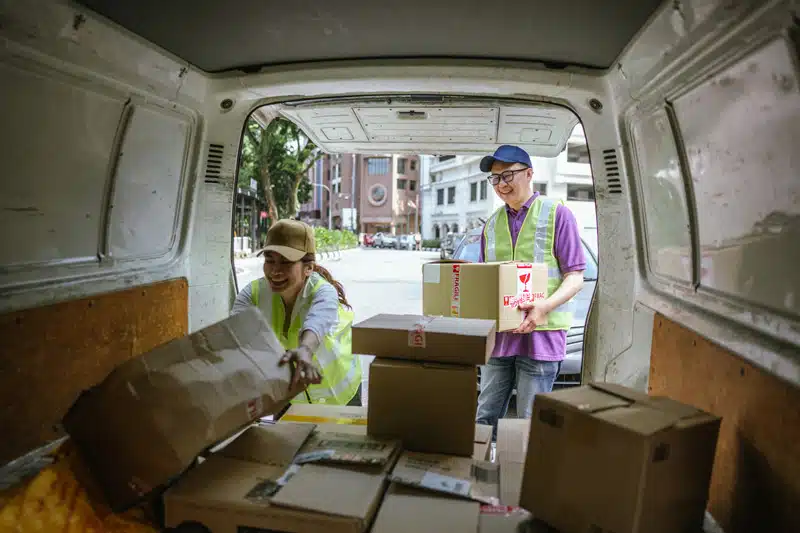
Choosing Your Last-Mile Delivery Provider Should Be a Brand Decision
Enterprise retailers and grocery chains, often evaluate last-mile delivery through an operational lens. Cost per stop, delivery windows, route density, and carrier coverage typically dominate the conversation. But customers rarely think about any of those things. What they remember is if their order arrived on time, if the experience felt professional, and if the delivery reflected the brand they chose to buy from in the first place.
Choosing a last-mile provider should be more than a logistics decision. It’s a brand decision.
Direct-to-consumer fulfillment continues to grow at a rapid pace, elevating the final delivery experience to one of the most visible customer touchpoints in the supply chain. For enterprise retailers, pharmacies, grocers, and healthcare organizations, the last mile is about protecting customer trust, reinforcing brand reputation, and creating consistency that positively shapes the customer journey. This is what truly matters.
The Last Touchpoint Is the One Customers Remember
Customers may spend only a few minutes placing an online order; but the delivery experience often determines how they feel about the entire transaction. A late delivery, damaged package, poor communication, or unprofessional driver can quickly overshadow an otherwise positive purchase experience.
In many cases, the delivery driver becomes the only human interaction a customer has with the brand. These interactions matter.
A strong last-mile delivery strategy recognizes that the final touchpoint directly impacts customer loyalty, repeat purchases, online reviews, and brand perception. Enterprise retailers that prioritize the delivery experience are better positioned to differentiate themselves in crowded markets where products and pricing are increasingly similar.
This shift is especially important in industries where reliability and professionalism are non-negotiable. Grocery delivery, healthcare logistics, pharmacy distribution, and high-value retail all require a higher level of accountability than a transactional delivery network can typically provide.
What Happens When Last Mile Becomes a Commodity
Many organizations treat last-mile delivery as a commodity service driven primarily by speed and cost reduction. While that approach may create short-term savings, it often introduces long-term operational and customer experience risks.
Crowd-sourced and gig-based delivery models can create inconsistent service quality because drivers may have limited training, minimal connection to the retailer’s brand standards, and high turnover rates. The result can include:
- Missed or delayed deliveries
- Poor communication with customers
- Inconsistent handling of products
- Limited accountability when issues occur
- Brand confusion during the delivery experience
When a customer receives poor service from a delivery provider, they rarely separate the delivery company from the retailer. The retailer absorbs the reputational damage.
For enterprise brands, that cost can be significant. Negative customer experiences increase support costs, reduce repeat business, and weaken brand trust over time.

Powering Last Mile Delivery from Store to Door
When a national grocery chain needed drivers that could to deliver orders on time, with care, and maintain exceptional customer satisfaction scores, they turned to Capstone.
A short-term solution soon grew into a nationwide, performance-driven last mile program delivering on time, in full, and with trusted quality.

The Brand Cost of Gig Delivery Models
Gig delivery networks were designed to maximize flexibility and scale quickly, but that model is not always aligned with enterprise-level customer experience expectations.
A revolving network of independent drivers may solve capacity challenges during peak demand periods, but it can also create gaps in accountability and consistency. Drivers often represent multiple platforms simultaneously, wear inconsistent branding, and operate with varying levels of training and operational oversight.
For brands focused on customer retention and long-term loyalty, those inconsistencies have an outsized impact.
A dedicated courier vs. gig delivery comparison should not just measure transportation efficiency. It should determine who controls the customer experience.
Enterprise retailers need delivery partners that function as an extension of their brand, rather than a disconnected third party. To protect customer experience, they must provide consistent service standards, professional drivers, operational transparency, and technology that supports visibility throughout the delivery lifecycle.
What Dedicated, Retailer-Branded Last Mile Actually Changes
A dedicated courier model creates greater alignment between logistics operations and brand expectations.
Instead of relying on an unpredictable labor pool, dedicated drivers are trained specifically to support the customer experience standards of the retailer they represent. That creates greater consistency across deliveries and reduces operational variability.
Capstone Logistics approaches enterprise last mile logistics with a dedicated courier model built around accountability, visibility, and professionalism. Drivers can be branded to represent the retailer directly, creating a more seamless and trustworthy customer interaction.
The operational advantages extend beyond branding alone. Dedicated delivery networks support:
- More consistent customer interactions
- Better handling of sensitive or high-value goods
- Improved communication and issue resolution
- Greater compliance with retailer policies and procedures
- Stronger operational oversight and reporting
Capstone also supports these operations with advanced delivery technology that provides real-time visibility, workforce management, and delivery tracking capabilities.
For retailers managing complex delivery environments, visibility and consistency become critical components of the overall customer experience.
Accountability Built Into the Model
Enterprise brands need delivery providers that can scale without sacrificing service quality.
Capstone’s courier network includes more than 2,000 professional drivers supporting over 43,000 deliveries and more than 180,000 packages per day. The company also operates a growing network of regional hubs and cross-dock facilities designed to improve delivery speed and operational efficiency.
That infrastructure supports a delivery model focused on reliability rather than transaction volume alone.
Capstone’s drivers are extensively vetted, classroom trained, and supported by a live 24/7/365 dispatch and operations team. Specialized programs, including HIPAA-trained pharmacy drivers, help support industries where compliance and professionalism are especially important.
Cross-dock capabilities also help enterprise retailers stay closer to customers, even when primary operations are located farther away. Strategically positioned facilities near key markets support faster delivery times, flexible operations, and greater network responsiveness.
At the same time, Capstone’s model is designed to remain cost competitive through our pay-for-performance model. Organizations can achieve estimated savings of 10–20% compared to crowd-sourced delivery alternatives while maintaining higher service consistency and operational accountability.

Last-Mile Delivery Is a Customer Experience Strategy
Retailers invest heavily in branding, ecommerce platforms, customer acquisition, and in-store experiences. But the last mile often determines whether all of those investments result in a positive customer impression.
A delivery provider is not simply moving products from point A to point B. They are representing the brand at the moment customers experience it most directly.
As enterprise retailers evaluate their last-mile delivery strategy, the conversation should expand beyond transportation costs and route optimization alone. Reliability, professionalism, accountability, and customer trust all play a role in long-term brand performance.
The companies that treat enterprise last mile logistics as part of the customer experience strategy — rather than a commodity service — will be better positioned to strengthen loyalty and protect brand equity over time.
Ready to evaluate your last-mile delivery strategy?
>> Learn more about Capstone’s last mile 3PL capabilities and dedicated courier solutions.