
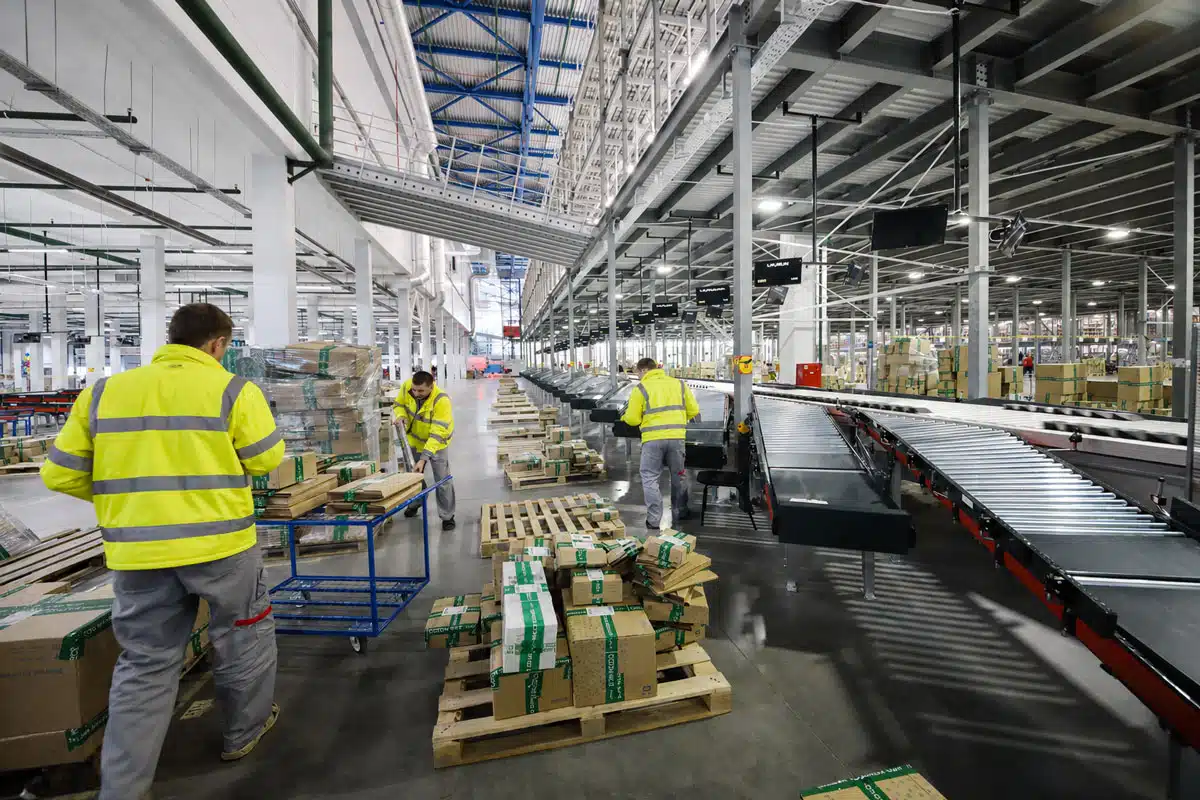
Beyond the Box: Why More Supply Chain Work Is Happening Inside the Four Walls
For years, the warehouse has served as the operational backbone of the supply chain — a place to receive inventory, store products, fulfill orders, and ship them to customers. While those core responsibilities remain essential, today’s distribution centers are taking on a much broader role.
The Rise of Value-Added Services Inside the Warehouse
More and more, manufacturers, retailers, and consumer packaged goods (CPG) companies are asking warehouses to do far more than move products. They are assembling promotional kits, customizing shipments for individual retailers, building displays, repackaging products, processing returns, and preparing inventory for its final destination. In many facilities, work that once happened in a factory or at a separate packaging facility is now happening just steps away from outbound shipping.
The evolution reflects a broader shift in supply chain strategy. As companies work to improve flexibility, reduce transportation costs, respond more quickly to changing demand, and simplify vendor management, warehouse value-added services have become an increasingly important competitive advantage
What Are Value-Added Services in a Warehouse?
Value-added services (VAS) are activities performed by a 3PL inside a warehouse that extend beyond traditional receiving, storage, picking, and shipping. They prepare products for specific customers, channels, or market requirements before they leave the distribution center.
Examples of value-added services in logistics include:
Some of these activities are product-focused, while others support the facility itself. Together, they help distribution centers operate more efficiently while allowing customers to consolidate multiple operational needs under one partner.
Why More Supply Chain Work Is Moving Inside the Warehouse
Several industry trends are driving greater demand for warehouse value-added services.
- More Complex Customer and Retail Compliance Requirements
Retailers increasingly have unique compliance requirements for packaging, labeling, pallet configuration, and delivery. A shipment destined for one retailer may require completely different preparation than the same product headed elsewhere.
Rather than maintaining separate production lines for every customer, manufacturers are postponing final product preparation until inventory reaches a regional distribution center.
This supply chain postponement strategy preserves flexibility until demand and destination requirements are clearer.
- Shorter Product and Promotional Cycles
Limited-time promotions, seasonal products, subscription bundles, and retailer-specific campaigns require fast execution.
Instead of sending inventory to multiple outside vendors before shipping, companies can complete kitting, display builds, and promotional packaging inside the warehouse, reducing handling and accelerating speed to market.
- SKU Proliferation
Consumers expect more product choices than ever before. More package sizes, flavors, colors, and retailer-exclusive configurations create additional operational complexity.
Performing final assembly or packaging inside the warehouse allows businesses to hold common inventory until demand becomes clear, reducing excess inventory while improving responsiveness.
- The Need to Simplify Supply Chain Operations
Perhaps the biggest shift is organizational.
Many companies still rely on separate vendors for warehouse labor, kitting, maintenance, sanitation, security, and other operational services. While each provider may perform its own function well, managing multiple vendors introduces complexity:
- Multiple contracts
- Multiple staffing models
- Multiple operational leaders
- Multiple safety programs
- Multiple communication channels
- Multiple points of failure
Every additional vendor increases coordination requirements and creates another potential disruption point.
Visibility Matters in Healthcare Logistics
Healthcare organizations transport vital packages, and as such they need more than retail-standard delivery confirmation. They need real-time visibility into transportation activity.
How do medical couriers maintain chain of custody? Modern last-mile networks provide:
- GPS tracking and shipment visibility
- Proof of delivery
- Chain-of-custody documentation
- Automated notifications
- Route performance reporting
- Delivery analytics
This level of visibility helps healthcare organizations prove chain of custody, improve accountability, identify opportunities for optimization, and make faster operational decisions.
Visibility creates confidence and enables continuous improvement.
Move Your Product Preparation Closer to Your Customer

- Build kits, bundles and promotional displays close to outbound inventory
- Scale specialized labor around changing demand
- Reduce transportation between production, packaging and distribution sites
- Improve visibility from inventory preparation through shipment
Bring greater flexibility to product preparation without adding complexity to the supply chain.
How Value-Added Services Complement Warehouse Automation
Automation continues to reshape warehouse operations; but automation doesn’t eliminate the need for people. It changes where people create value.
Automated storage systems, conveyors, autonomous mobile robots (AMRs), and goods-to-person technologies excel at repetitive movement and standardized workflows.
Many value-added services, however, require flexibility and judgment. Building promotional displays, assembling retail kits, inspecting returns, customizing orders, and handling retailer-specific packaging often involve work that changes frequently or varies by customer.
The most effective warehouse operations combine automation for repetitive tasks with skilled labor for specialized value-added activities. Together, they create faster, more adaptable operations capable of supporting increasingly complex customer requirements.
The Benefits of Performing Value-Added Services in the Warehouse
When value-added services are integrated into warehouse operations, companies can gain advantages that extend well beyond labor efficiency.
01. Faster Response to Customer Demand
Because products remain inside the distribution center throughout the process, organizations can delay final customization until customer orders are received. This improves flexibility while reducing unnecessary inventory movement.
02. Fewer Product Touches and Handoffs
Every transfer between facilities creates opportunities for delays, damage, and added transportation costs.
Completing kitting, labeling, repackaging, or light assembly inside the warehouse reduces unnecessary handling while simplifying product flow.
03. Better Operational Visibility
When inventory movement and value-added activities occur within a single operation, managers gain better visibility into production status, labor utilization, and outbound readiness.
Instead of coordinating updates from multiple vendors, operations leaders can see work in progress through one integrated lens.
04. Simplified Vendor Management
One of the most overlooked benefits is operational simplicity.
Working with a single strategic partner for warehouse labor, kitting and/or co-packing, maintenance, sanitation, security, and related services reduces administrative burden while improving accountability.
Rather than coordinating several providers, organizations have one operational partner responsible for execution across the facility. This is especially relevant during peak seasons or unexpected disruptions, when operations must respond quickly.
Questions to Consider Before Expanding Warehouse Value-Added Services
Not every operation requires the same level of value-added support. Organizations evaluating their distribution strategy should consider several questions:
- Which product preparation activities happen outside the warehouse today?
- How many vendors are involved in supporting warehouse operations?
- Where do handoffs create delays or unnecessary costs?
- Could postponing product customization improve inventory flexibility?
- Do seasonal promotions create labor challenges that could be consolidated?
- Would one operational partner reduce complexity across the facility?
The answers often reveal opportunities to simplify operations while improving responsiveness.
The Warehouse Has Become a Strategic Extension of the Supply Chain

Distribution centers today have much more involvement in the customization of products. They are flexible production environments where inventory is prepared for customers, promotions are built, products are customized, and operational services come together under one roof.
As supply chains become more complex, organizations that perform these activities closer to the customer — and with fewer operational handoffs — are often best positioned to improve service, control costs, and respond quickly to changing market demands.
For companies managing multiple vendors within a single facility, the next opportunity may not be adding another service provider. It may be finding a partner capable of bringing more of those services together inside the same four walls.
One Partner, Fewer Handoffs
Capstone’s Value-Added services bring warehouse labor, kitting, light assembly, and facility services under a single partnership backed by a 100% W-2 workforce, performance-based accountability, and real-time visibility through our proprietary operations suite.