
The True Cost of an Underperforming Warehouse
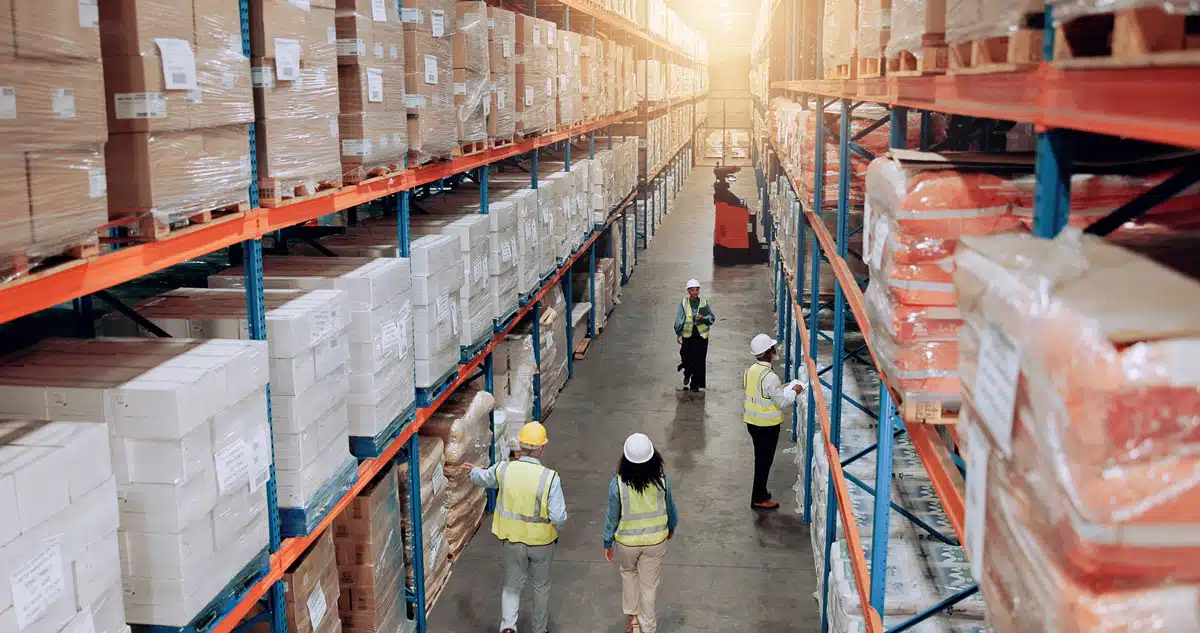
A warehouse can look busy and still fall short. Product is moving, trucks are coming and going, and supervisors are keeping work on track. Yet overtime keeps climbing, and the operation may need more people just to keep up.
Warehouse performance management helps leaders see whether rising labor costs come from a staffing gap or from work that is taking more hours than it should.
It’s easy to conclude that the warehouse needs more labor. But when performance consistently falls short, extra hours and headcount can mask the problems causing delays. The costs can spread beyond the labor budget to lower productivity, slower inventory flow, and missed service commitments.
For warehouse and distribution leaders, the first step is seeing where those costs build up and what’s causing them.
What Is Warehouse Performance Optimization?
Warehouse performance optimization is the process of measuring and improving how effectively labor, processes and resources work together to move product through an operation. Rather than simply adding headcount or labor hours when performance falls short, optimization focuses on identifying the underlying causes of lost productivity and improving output, cost and service performance.
That starts with understanding where warehouse underperformance shows up.
Where Warehouse Underperformance Really Shows Up
Warehouse inefficiency rarely appears as one large expense on a financial statement. Instead, costs tend to accumulate across the operation.
A few extra hours here. Additional labor there. More time spent correcting errors. A missed shipping window that creates downstream delays. A supervisor spending hours addressing recurring performance issues instead of managing the operation strategically.
Over time, those seemingly isolated costs can have a significant impact on the bottom line.
Some of the most common hidden costs include:
- Overtime
- Additional Labor
- Errors and Rework
- Detention and Missed Shipping Windows
- Management Distraction
- Turnover
- The Cycle of Adding More Labor
When productivity falls below expectations, overtime is often one of the first responses. Employees work longer shifts to complete the same amount of work, increasing labor costs without necessarily increasing output at the same rate. If overtime becomes a regular part of the operating model, it can indicate that the operation is relying on additional hours to make up for inefficient processes or inconsistent productivity.
When an operation struggles to keep pace, adding people can seem like the most straightforward solution. But if the underlying processes remain inefficient, additional employees may simply increase the number of people working within the same inefficient system. Labor costs rise while productivity may remain relatively unchanged. This is particularly challenging during a supply chain labor shortage, when finding and retaining qualified warehouse workers is already difficult.
Picking errors, loading mistakes, inventory discrepancies and other problems can require employees to repeat work that should have been completed correctly the first time. Beyond the direct labor involved, errors can impact customer service and create additional downstream costs.
When loading and unloading processes take longer than expected, drivers and equipment can be delayed. Missed shipping windows can add fees, create additional transportation costs, and disrupt schedules throughout the supply chain. A warehouse that consistently struggles to move product on time can therefore create costs well beyond its own operation.
Supervisors and operations leaders may spend significant portions of their day responding to staffing shortages, productivity problems, missed targets, errors and other recurring issues. That leaves less time for process improvement, employee development, planning and performance management.
An inefficient operation can contribute to employee frustration and turnover. When productivity expectations are unclear, workloads are inconsistent, or employees are continually asked to compensate for inefficient processes, maintaining a stable workforce can become more difficult. Turnover then creates another cycle of recruiting, training and onboarding costs.
When a warehouse falls behind, the traditional response is often straightforward: add hours, add people or put additional pressure on supervisors to increase output.
That approach may help address an immediate capacity issue, but it doesn’t necessarily solve the reason productivity is falling short.
If the process itself is inefficient, adding labor can become a recurring expense rather than a sustainable solution. More employees may be required to achieve the same output, overtime may continue to increase, and supervisors may remain focused on managing symptoms rather than addressing the root cause.
In many cases, the end result of adding more labor is a warehouse that is continually working harder without becoming more productive.
How Do You Measure Warehouse Productivity?
One of the most effective ways to understand warehouse performance is to set measurable standards and compare actual results against them.
Without meaningful performance data, it can be difficult to tell whether an operation has a labor shortage or whether its current labor is being used inefficiently.
These measures can help leaders spot where performance is falling short:
- Units or cases per labor hour: How much product is handled for each hour of labor.
- Cost per unit: How labor performance affects operating costs.
- Overtime: How often extra hours are needed to meet demand.
- Dock-to-stock time: How quickly received product becomes available inventory.
- Throughput: How much product is processed in a given period.
- Turnover: How often employees leave and need to be replaced.
- Service-level performance: Whether the warehouse is meeting customer requirements.
No single metric tells the whole story. Adding people may increase output, but if units per labor hour stay flat while cost per unit and overtime rise, the extra labor may be covering up a productivity problem rather than solving it.
What Better Warehouse Performance Looks Like
The cost of warehouse inefficiency varies by operation, but even relatively small productivity gaps can compound across thousands of labor hours. The impact is best measured through metrics such as cost per unit, labor hours, overtime and throughput rather than labor rates alone.
Capstone’s own operational results illustrate the difference. At one beverage operation, throughput increased from 40 to 51 cases per hour after conversion to a performance-driven model, even as average associate wages increased. At another operation within the same broader partnership, average throughput improved 28%. The result was more productive labor hours rather than simply cheaper ones.
How Much Can Warehouse Inefficiency Cost?
Seasonal volume spikes were putting pressure on productivity, workforce stability, and operating costs for one of the world’s largest snack and beverage manufacturers.
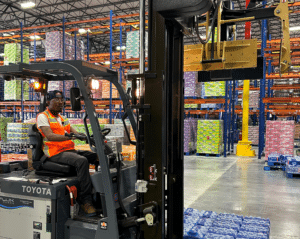
Results at individual sites included:
- Throughput: 40 to 51 cases per hour
- Direct productivity: 78 to 141 cases per hour
- Retention: 37% to 72%
- Average associate wages: Increased by $3.80 per hour
The productivity gains did not come from lowering wages. They came from a more efficient operating model and better use of each labor hour.
How Can Warehouses Improve Productivity During a Labor Shortage?
When qualified labor is difficult to find, getting more from existing labor becomes increasingly important. That doesn’t mean asking employees to work harder or simply extending shifts. It means creating an operating model that makes better use of every labor hour.
Sustainable warehouse performance optimization requires labor, processes, accountability and incentives to work together.
That means establishing clear performance expectations, measuring results consistently and giving employees and supervisors the tools and information they need to meet those expectations.
It also means looking at the warehouse as a connected system. Improving productivity in one area may have limited value if another process continues to create delays. Reducing overtime may be difficult if throughput expectations and labor allocation aren’t aligned. Increasing staffing may have little impact if inefficient processes continue to dominate labor hours.
The goal is to create an operation in which available labor can perform more consistently and productively. The most effective approach is to understand how each part of the operation contributes to overall performance.
Turning Warehouse Productivity Into a Competitive Advantage
 Every warehouse has labor costs. The question is how effectively those labor hours are being used.
01. When an operation relies on overtime, additional headcount and management intervention to maintain service levels, the costs can extend far beyond the payroll line. Errors, rework, delays, turnover and missed opportunities for process improvement can all contribute to the true cost of underperformance.
02. Warehouse performance optimization starts with visibility.
03. By measuring productivity, benchmarking performance and identifying where inefficiencies are occurring, leaders can make more informed decisions about labor and operations. The result is an operation designed to produce more consistent output, control costs and support service-level expectations.
For organizations facing ongoing labor challenges, that level of operational efficiency can make a significant difference.
The goal isn’t just to keep a warehouse busy. It’s to build a warehouse that performs.
Is your warehouse working harder—or performing better?
Capstone helps warehouse and distribution operations identify performance gaps, optimize labor and build operating models designed around measurable results.
Are you ready to improve your warehouse performance?